
Dalia Mukhtar-Landgren | December 2025
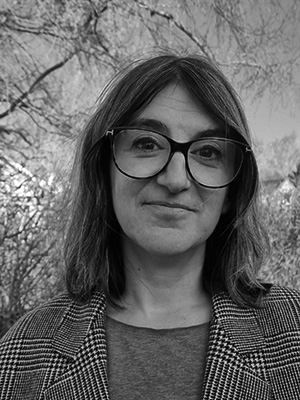
Tell us about who you are and how you got here
I am an Associate Professor in the Department of Political Science. From early on, I was interested in politics and society. I was employed at the City of Malmö when Bo01, the housing exhibition in the Western Harbour, was being planned. And at the same time, we had a lot of cutbacks in schools in Rosengård where I was working. For me, it was very odd that you could plan and build a very exclusive housing area in the Western Harbour in one part of the city while firing teachers in another part of the city.
My doctoral research engaged with questions about the allocation of power in society. I wanted to understand how it was possible for the state to support unjust systems. I've always been really interested in the state and the rights of the state to intervene in people's everyday lives and to reorganize societies. I believe the public sector is a good way to allocate resources, but they have a lot of responsibility. So we need to continuously push our politicians and public servants to defend public values.
How do your research interests connect to urban issues?
I have always been interested in local contexts. What are the limits of what a local government can do and what should they do? How should power be allocated to different stakeholder groups? And I am particularly interested in urban planning and how cities change over time. Over the past few decades, a lot of old industrial cities have rebranded themselves as ‘post-industrial cities’ and ‘cities of knowledge’. Malmö is a perfect example of this. How can you redevelop an entire city from an industrial city to a city of knowledge? I'm interested in the limits of politics and the limits of policymaking. Who decides those limits and how are they upheld in different ways?
It’s interesting to compare Swedish local governments to their counterparts in other Nordic countries. Local governments in Sweden are a bit more privatized, they rely on more outsourcing and consultants. And they tend to govern by objectives and this gives civil servants (and increasingly, consultants) a lot of influence and power. What does this mean for public values? This is a key question.
Tell us about your current research projects
I have two big research projects on responsibility in innovation. One is about resilience and epistemic justice in intermodal local travel and the other is about legitimacy in regulatory sandboxes. In short, I am interested in how responsibility is allocated among different actors.
Why do you engage in the Urban Arena?
I tend to see the city as an institutional and administrative unit, and I love to talk to people who see it in other ways. It helps to broaden my perspective and to challenge my assumptions. And I enjoy being on the boundaries of multiple disciplines that are permeable and fluid. I have so much respect for the work that is being done in other disciplines. And for me, the Urban Arena is a place where I can be part of that multidisciplinary, interdisciplinary conversation.